
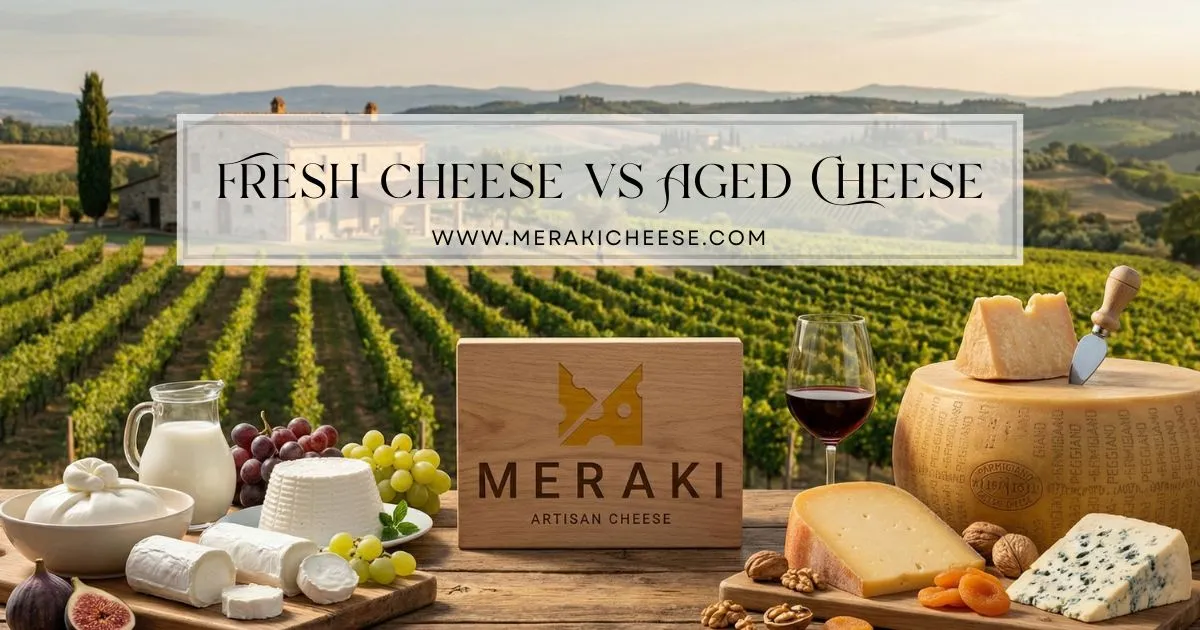
Cheese comes in many forms, but one of the most essential distinctions lies in how it is made and enjoyed: fresh versus aged. While both begin with similar ingredients, the processes they undergo create noticeable differences in taste, texture, shelf life, and nutritional profile. Here are the key factors that set fresh and aged cheese apart.
- Making procedure
- Flavour
- Texture
- Shelf life
Understanding the difference between fresh and aged cheese helps you make informed choices based on flavour preference, digestion, and culinary use. This guide explores what truly sets these two cheese varieties apart and the most popular variants.
What is Fresh Cheese?
Fresh cheese is a wide ranging category of cheese that is not aged or matured and is meant to be eaten soon after it’s made. It has a soft texture, mild flavour, and high moisture content, making it light, creamy, and milky in texture and flavour profile. The process of making fresh cheese is faster. Such cheese can be made and is ready to be consumed within a few hours rather than weeks or months. Fresh cheeses possess a wide range of textures, from crumbly to stretchy to spreadable. Despite their natural simplicity and lack of aging, fresh cheeses are available in various forms. The variety of flavours and textures in fresh cheeses can also be influenced by the type of animal milk used and the usage of any marinades or brines.
What is Aged Cheese?
The term affinage in French means “to refine”. This is precisely what happens when you age cheese. Cheese matures exquisitely, much like your favourite pair of jeans, great wine, and your cool aunt. A soft, mild, milky cheese might turn into a hard, caramelised, nutty cheese. Mature cheddar and young cheddar, both aged cheeses, could also be two entirely different types of cheese both texturally as well as flavour profile wise. The process of maturing cheese is intricate. Expert cheesemakers and affineurs have specific aging conditions for their cheeses and affinage is an art that is mastered through experience and patience. It is essentially a series of microbial activities that occur naturally as new yeast and bacteria are created, ending the life cycle of older microbes, in the ambient environment of right temperature and desired humidity. A cheese is a living entity that is ever evolving!
Popular Categories of Cheeses and How They’re Made
This article aims to find out the different kinds of natural, unprocessed cheese, both fresh and aged.
Mozzarella & Burrata
This is perhaps the most well-known of the fresh cheeses. Mozzarella is usually prepared from either cow or buffalo milk, as in mozzarella di bufala. There’s more to plain mozzarella than meets the eye. The distinctive process of stretching the cheese curds, once they reach the correct pH level, gives mozzarella its distinctive stretchiness and meltability.
Mozzarella is also called pasta filata, or “stretched curd” cheese. The ability of mozzarella to expand later on when heat is applied is created by this stretching of the curd during production. A contemporary relative of mozzarella is burrata. This is your mozzarella pouch filled with strings that have been dressed with cream. This mixture, known as stracciatella, is regarded as a fresh cheese in itself. These modifications are what make fresh cheeses simple, yet unique in taste and texture.
Ricotta
As ricotta is made from the liquid whey left over from other forms of cheese, it might technically be regarded as a by-product of cheese. Small amounts of milk solids are still present in this whey, and further heating and acidification of the whey produce micro-curds that are strained out of the liquid to create your fluffy ricotta. Since it undergoes the heating and coagulation stages again, it is called ricotta. The word means “recooked” in Italian, reflecting its origin. The beauty of Italian cheese-naming lies in its literal transposition.
Cream Cheese/Mascarpone
You might have recently seen creative takes on cream cheese. Yet, simply, it is a cultured dairy product created by separating curds and whey. This is controlled by factors like fat and acid levels. Cream cheeses are made by adding cream to milk.
Chèvre
Goats were one of the earliest farm animals to be domesticated. This is why fresh chèvre may be among the earliest varieties of cheese. Fresh goat cheese is unique among fresh cheeses. It has a highly distinct flavour. In its making, expertise of the method is crucial. This prevents a funky, strongly “goaty” taste. Your fresh chèvre has a tangy flavour and a smooth, creamy-to-slightly grainy consistency.
Feta
Some fresh cheeses, such as feta, can be preserved in brine. This improves their salty flavour and lengthens their shelf life. This is crucial for high-moisture fresh cheeses, which generally have a brief shelf life. Although feta can be prepared from a variety of animal milks, it is usually manufactured from sheep or goat milk. This adds to its potent, unique flavour. Because feta has a larger curd structure than other fresh cheeses, it is recognised for being especially crumbly and slightly drier.
The Aging of Cheese
Many popular cheeses owe their very existence to the aging process. Maturation allows complex and distinctive flavours to develop over time. If you’ve ever taken a bite of aged cheddar and been surprised by its bold, sharp, and richly layered taste, you’ve experienced the magic that aging brings to cheese. As cheeses age, cheese makers can craft a wide range of rich, complex flavors. They adjust the storage environment to create conditions that accelerate or slow the process. Cheesemakers and affineurs create the ideal ambient environment, controlling the temperature and humidity of the aging space.
Cheddar Cheese
Aged for a few months to many years, cheddar cheese is renowned for its firm texture and acidic flavour. The flavour gets sharper and more complex as it ages. Clothbound cheddar is one of the most prominent cheddar varieties, valued for its distinctive character and artisanal quality. It is made using traditional methods, in which freshly pressed cheddar is wrapped in cheese cloth and coated with fat or oil. This cloth allows the cheese to mature slowly while protecting it from excess moisture and contaminants. As it ages, the cheese develops a firm texture and deep, complex flavours that reflect careful craftsmanship and time-honoured cheese making practices.
Blue Cheese
Known for its distinctive flavor, blue cheese requires specialized aging techniques. Strong, powerful, and somewhat of an acquired taste, it’s incredibly satisfying. Blue cheeses come in a variety of styles, each with unique flavors, textures, and aging methods. While Gorgonzola Piccante is a bold, aged Italian blue cheese known for its crumbly texture and sharp, spicy flavour, its mild counterpart Gorgonzola Dulce is a soft, creamy blue cheese known for its mild sweetness and buttery texture. Roquefort is a classic blue cheese made from sheep’s milk and known for its bold, tangy flavour.
Swiss Cheese
Originating from the Swiss Alps, aged for several months, Swiss cheese is a mild, slightly nutty cheese famous for its signature holes, or “eyes,” formed by natural gas during fermentation. If you have ever wondered at the animated cheeses in Tom and Jerry, this is probably what inspired Jerry’s shenanigans.
Parmesan
Parmesan cheese, widely known for its hard texture and nutty, savoury flavour, is a popular Italian cheese used in cooking and grated over dishes. It is aged for months to years. Its authentic counterpart, Parmigiano-Reggiano, is a protected designation of origin (PDO) cheese made in specific regions of Italy under strict production rules. Parmigiano-Reggiano has to meet rigorous standards of sourcing milk, making and aging process, and volume making it richer in flavour, more granular in texture and one of the most coveted cheeses in the world.
Gouda
Gouda is a washed-curd cheese that comes in both young and aged varieties, each offering a distinct taste experience. The young version is mild, creamy, and smooth, while the aged Gouda develops a richer, sharper flavour with a crumblier texture. Versatile and delicious, it’s perfect for snacking, cooking, or pairing with wine.
Conclusion: Embrace the Best of Fresh and Aged Cheese
Understanding the difference between fresh cheese and aged cheese allows you to make more informed choices from the point of view of taste, digestion, and culinary creativity. Fresh cheeses like mozzarella, ricotta, and chèvre offer soft textures and mild flavours, while aged cheeses such as cheddar, parmesan, and blue cheese deliver bold, complex tastes shaped by time and careful craftsmanship.
Whether you prefer the creamy simplicity of fresh natural cheese or the rich intensity of aged varieties, choosing unprocessed cheese ensures you enjoy authentic flavours without unnecessary additives. Discover the finest selection of fresh and aged cheeses with Meraki Cheese – crafted with care, naturally delicious, and perfect for every palate. Explore our range and elevate your cheese experience!
Fun Fact – Aged cheeses are easier to digest given their higher lactose breakdown over a longer period of time during aging. Fresh cheeses are therefore best avoided by those who are severely lactose intolerant.