
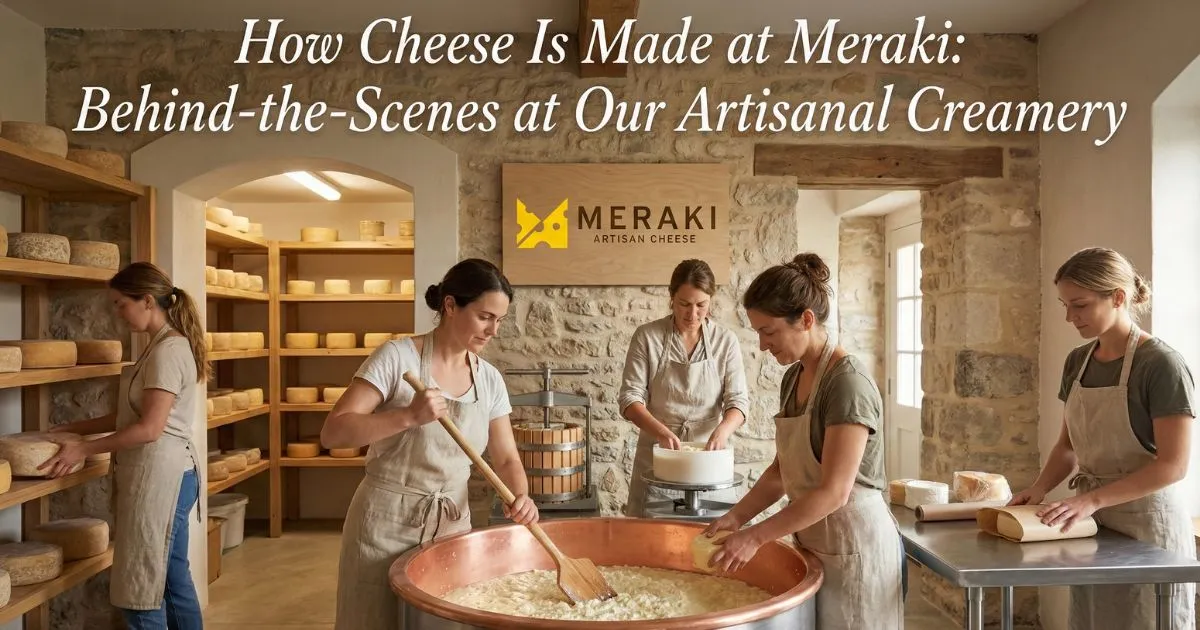
Artisan Cheese is the quiet alchemy of turning something pure and simple into a deeply expressive creation. Shaped by fresh milk, guided by time, temperature, and skilled hands, it holds the character of its origin, the patience of its maker, and the rhythm of nature in every bite. From soft, subtle textures to bold, mature flavours, cheese tells a story of craft and care. At Meraki Cheese, we see cheese as more than nourishment; it is a tribute to tradition, mindful craftsmanship, and natural processes. Every wheel, wedge, and curd reflects dedication, quality, and intention. In an age of mass-produced dairy, Meraki chooses a unique path, creating cheese slowly and naturally, with heart at the centre. This journey inside our artisanal creamery reveals not just how our cheese is made, but why each small detail makes a meaningful difference.
What Makes Meraki Cheese Different?
Before we dive into the process, let’s understand what sets Meraki as one of the best cheese brands in India:
- Unprocessed and natural ingredients
- Small-batch craftsmanship
- Minimal manipulation for maximum flavour
- Transparent production with ethical practices
- Cheese that reflects its origin and care
Meraki Cheese honours traditional cheese-making techniques while applying modern standards of hygiene and food safety. The result? Handcrafted cheese with a personality that is rich, complex, and unforgettable.
Inside Meraki’s Creamery: The Art and Craft of Artisanal Cheese Making
Step 1: Sourcing High-Quality Milk
It’s undeniable that great cheese always starts with great milk. At Meraki, we always prioritize sourcing milk from trusted farms where animals are raised with care and never given artificial growth hormones or unnecessary additives. This ensures purity, quality, and natural richness in every batch. It’s all because cheese inherits the quality of its milk source, and we never compromise here. We prioritize:
- Fresh cow or goat milk collected from free-grazing, pasture-raised cattle
- Milk from grass-fed or well-balanced diets
- Milk tested for purity and nutritional consistency
Step 2: Testing and Standardizing the Milk
The next key step in our cheese-making process is testing and standardizing the milk. Once the milk arrives at our creamery, we immediately test it for:
- Fat content
- pH level
- Microbial quality
These checks help us adjust the milk if necessary to achieve the right balance for consistent cheese-making. This step ensures every batch of cheese starts on a strong footing.
Step 3: Preparing the Milk for Starter Culture
The next stage in cheese making involves gently warming the milk to prepare it for the starter culture. Maintaining a precise temperature between 30° – 32° C creates the ideal environment for activation of starter culture. This controlled warmth activates the milk, allowing beneficial cultures to work effectively. Once the milk is ready, we add the clabber culture. At Meraki, we don’t use any store-bought culture but let the micro flora of the milk get transferred to the cheese, through the usage of this clabber culture. This step:
- Convert lactose into lactic acid
- Develop flavour complexity
These cultures are the living soul of cheese, influencing both taste and texture.
Step 4: Curd Formation
After the starter culture does its work, we add microbial rennet to coagulate the milk. This step turns liquid milk into a gel-like substance. Over time, the curd (solid) separates from the whey (liquid). At this stage, timing is critical. Too-fast or too-slow coagulation can affect the final quality of the cheese. In this step, we focus on:
- Observing visual texture
- Checking firmness
- Ensuring temperature precision
Step 5: Cutting the Curd
After coagulation and curd formation, the next notable step of cheese making is cutting the curd. Once set, we carefully cut the curd into desired sizes. For fresh cheeses, curds are cut into bigger chunks. On the other hand, we cut the curd into smaller pieces for aged cheese. Precise cutting is mandatory as it can affect:
- Moisture levels
- Final texture
- Fat content concentration
Smaller curds release more whey (drier cheese), while larger ones retain moisture (softer cheese). The way the curds look after cutting tells us a lot about what to expect later.
Step 6: Cooking and Stirring
Cooking and stirring are the next noteworthy steps of making cheese. However, this step is only applicable to aged cheese, as fresh cheese does not require any cooking. To make fresh cheese, gentle stirring is all that’s required after cutting the curd to bring it to the target pH. For aged cheese, once the curds are cut precisely, we gently heat and stir them. This process:
- Encourages whey to get released
- Helps curds firm up
- Shapes the internal texture of the cheese
We control heat and movement at this stage to achieve the optimal balance between texture and flavour development.
Step 7: Draining the Whey
In the entire cheese-making process, draining the whey is a vital step once the curds reach the desired texture. We repurpose whey in sustainable ways such as feeding animals, making ricotta, or composting. This helps reduce waste and celebrate circular practices.
Step 8: Pressing and Shaping
In cheese production, the pressing and moulding stages play a vital role in defining the cheese’s final form, texture, and structure. At this stage, the curds are placed in moulds. Pressing removes excess liquid and knits curds tightly together. Pressures and durations may vary by cheese type: fresh cheese doesn’t require pressing, while many aged cheeses do. The moulds and the amount of weight used define a cheese’s:
- Size and shape
- Texture
- Final appearance
Step 9: Salting
Did you know that salt is more than just a flavour when it comes to cheese production? Salting preserves and controls the microbial growth and activity in a wheel or block of cheese. Since we don’t use any artificial preservatives, salting is a way of preserving the cheese and hence our cheeses might come across as saltier in comparison to most commercially produced cheese. We apply salt through:
- Dry salting
- Brining (soaking in saturated saltwater)
Each of these methods influences taste, rind development, and aging potential.
Step 10: Aging (Affinage)
Aging, or affinage, is the step where magic happens. Fresh cheeses such as Ricotta, Feta, Burrata, Mozzarella, Halloumi, etc., go straight to packaging. Other categories of cheese, such as Gouda, Cheddar, Parmesan, Tomme, and Pepper Jack, age for months in carefully controlled rooms with specific temperature and humidity levels. During aging:
- Proteins break down into flavour-rich peptides
- Fats develop aromatic qualities
- Textures transform over time
Step 11: Monitoring and Quality Checks
Effective monitoring and quality checks are essential to making cheese that leaves a lasting impression long after it’s tasted. Throughout production, we run continuous checks including:
- Sensory evaluation (taste, aroma, texture)
- pH and moisture testing
- Microbial safety checks
This ensures every batch meets our high standards and your expectations.
Step 12: Packaging with Care
The final step in the cheese-making process at Meraki is packaging with care. Once the cheese reaches its ideal profile, we pack it thoughtfully using:
- Natural or breathable wraps, glass bottle, food quality packaging
- Clear labelling with ingredients’, type, and pairing tips
- Temperature controlled packaging for long distance shipping
What Makes Meraki Cheese Truly Special?
Meraki Cheese stands apart because here every wheel tells a story of patience, passion, and purposeful craft. From carefully sourced milk to time-honoured artisanal techniques, each step is guided by intention instead of shortcuts. It’s this devotion to authenticity and flavour that makes Meraki Cheese truly unforgettable. Here’s why our cheese stands out:
- Minimal Processing & Maximum Flavours: We don’t use artificial additives and shortcuts, so every cheese tastes authentic.
- Rich & Distinct Profiles: From buttery and mild to bold and aged, each variety has its own character.
- Ethical & Sustainable Practices: We prioritize animal welfare, sustainable use of whey, and responsible production.
- Connection to Craftsmanship: We at Meraki put our hearts into every step of artisanal cheese making, showing our dedication in every bite.
Taste, Texture, and Terroir: What You Should Expect
Being one of the best cheese brands, we believe that cheese isn’t just food, it’s an experience. When you enjoy Meraki Cheese, you’ll notice:
- Delicate aromas that evolve as you taste
- Textures from silky to crystalline, depending on age
- Balanced flavours that pair beautifully with fruits, jams, wine, or bread
The Closing Thoughts
Making cheese at Meraki is an art rooted in respect for the milk, the maker, and the moment it’s enjoyed. We respect traditions, embrace seasonal variations, and honour the ingredients we work with. Hence, every wheel reflects time, care, and thoughtful expertise. Our artisanal creamery blends old-world techniques with a dedication to quality, sustainability, and unforgettable flavour. Whether you’re new to cheese or a seasoned enthusiast, Meraki Cheese offers an authentic, heart-made experience worth savouring. Whether you’re discovering cheese for the first time or choosing a gourmet cheese gift online, visit Meraki Cheese today. Discover our handcrafted selection, crafted naturally, enjoyed wholeheartedly.